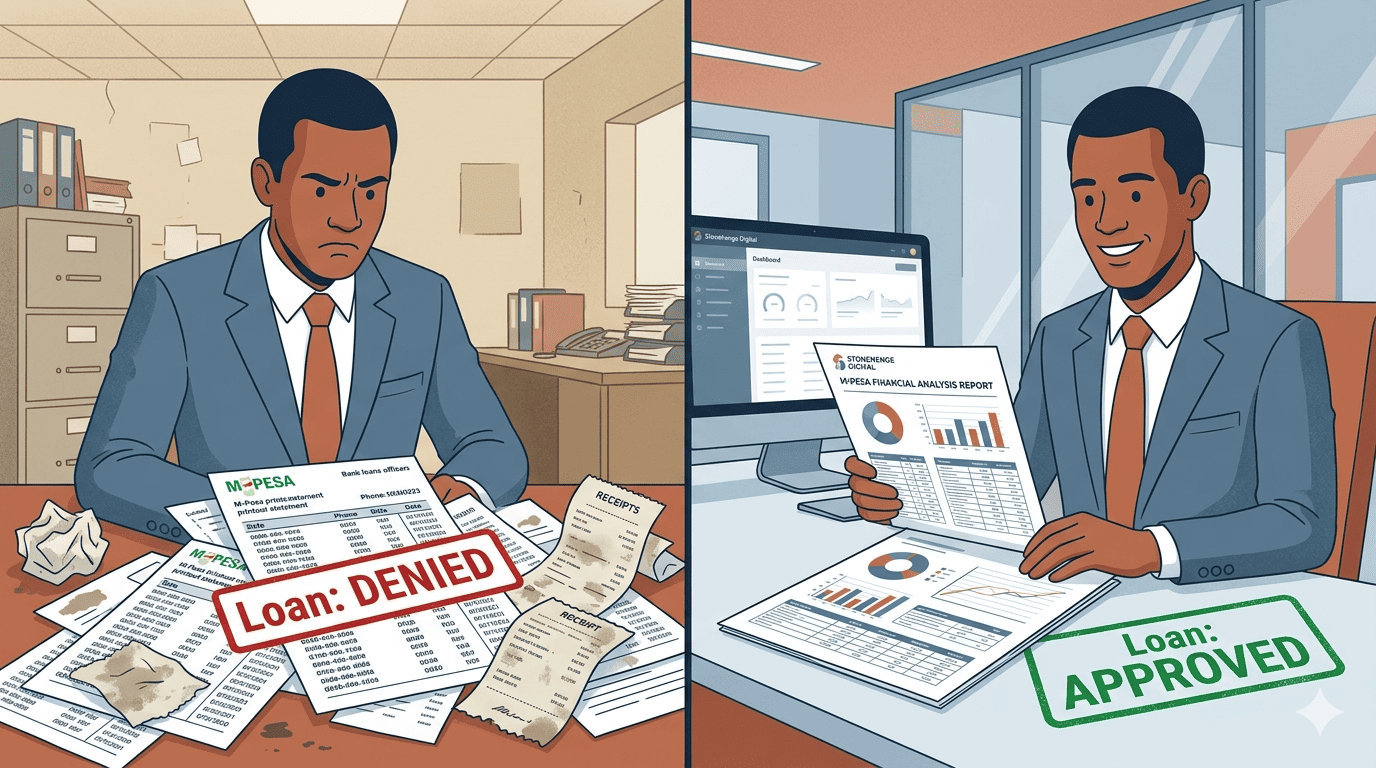
The "Good Float, Bad Books" Paradox
You have been running your shop for three years. Every month, your M-Pesa Till processes KES 800,000. Your bank statements show a healthy float. You walk into your bank confident of a KES 2M expansion loan. And the loans officer says, "We need to see your management accounts. Your P&L. Your balance sheet. Your debtor and creditor aging reports." You hand them a printed M-Pesa statement and a pile of receipts. Their expression tells you the answer before they speak: Denied.
The problem is not the amount of money passing through your till. The problem is that M-Pesa float does not equal profit, and banks need to see profit and separation of business and personal finances to underwrite a loan.
What Banks Actually Want to See (The 5 C's of Credit in Kenya)
Kenyan banks, whether Equity, KCB, or NCBA, evaluate SMEs using the 5 C's framework:
- Character: Your credit history (CRB report).
- Capacity: Your ability to repay the loan from business cash flow. (This is where management accounts shine—they show consistent, recurring profit, not just revenue spikes).
- Capital: Your own equity in the business.
- Collateral: Assets to secure the loan.
- Conditions: The purpose of the loan and market conditions.
A Stonehenge Digital Business Management Dashboard automatically generates the documents that prove Capacity.
The Dashboard Reports a Banker Will Love
1. Monthly Profit & Loss Statement (P&L)
Shows Revenue, Cost of Goods Sold, Gross Profit, Operating Expenses, and Net Profit. Segmented by month. This proves that you don't just move money; you make money.
2. Balance Sheet (Simplified)
Shows Assets (cash, inventory, equipment), Liabilities (supplier credit, loans), and Owner's Equity. This proves the net worth of the business.
3. Accounts Receivable (Debtor Aging)
If you sell on credit to businesses, this report shows who owes you money and for how long. It proves you have future cash inflows that can service a loan.
4. Inventory Valuation
Shows the value of your stock at cost. This can be offered as collateral (for commodity-type goods).
How to Present the Dashboard to Your Banker
Don't just hand over a phone screenshot. Generate a clean PDF report from the dashboard. Include a cover page with your business name, registration number, and KRA PIN. Have your dashboard data audited by a small accounting firm (KSh 5,000-15,000) for an added layer of credibility. The cost of the audit is an investment in a lower interest rate and higher approval chance.
Good M-Pesa statements show you are busy. A good management dashboard shows you are creditworthy.
Interested in Business Management System?
Let's build this for your business
Replace spreadsheets, paper records, and WhatsApp chaos with a custom system built for exactly how your business works.