When the Prompt Won't Pop
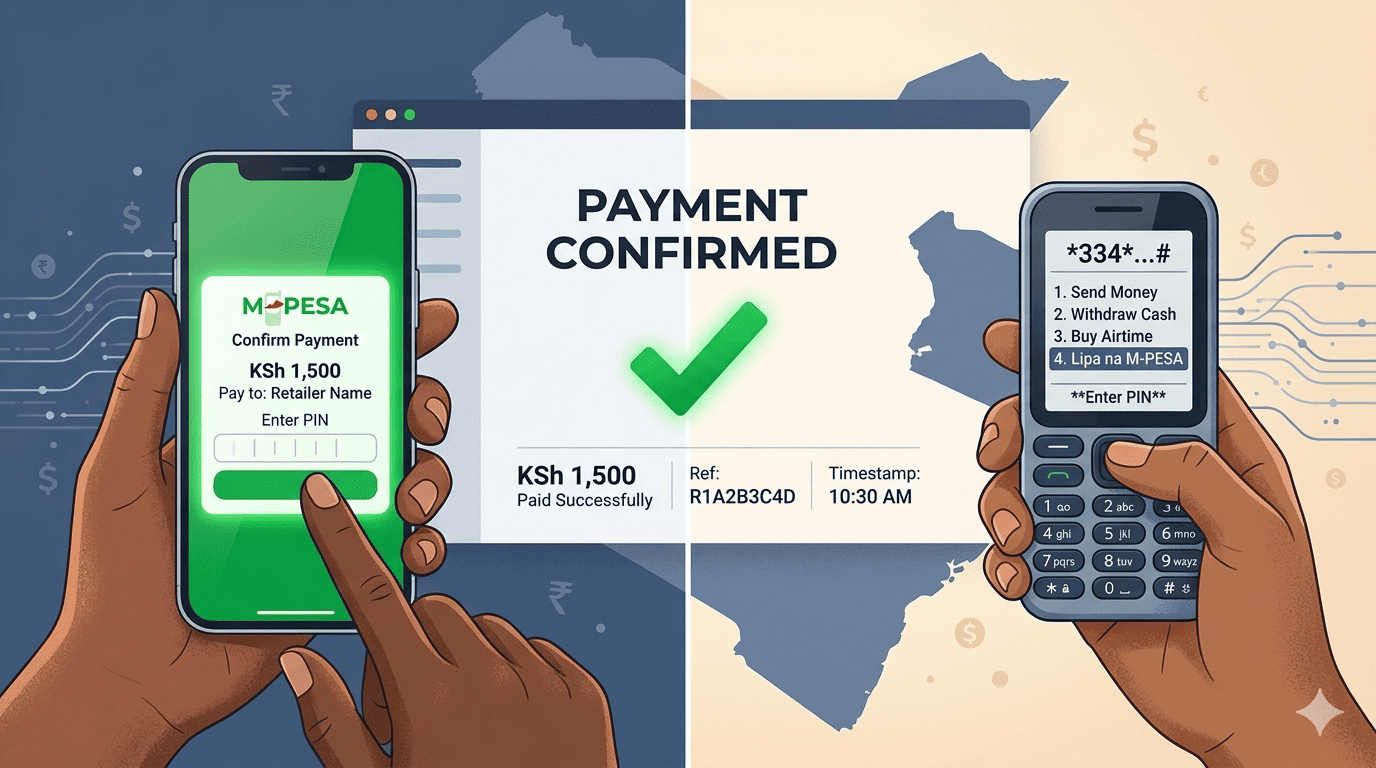
STK Push is brilliant—when it works. But for millions of Kenyans using feature phones ("kabambe"), or smartphones with data off (to save bundles), or in areas with spotty 3G/4G, the STK prompt never arrives. They're locked out of your checkout.
Enter USSD. The old-school *544# style interface is making a quiet, powerful comeback—not as a replacement for STK, but as a critical backup for the data-constrained customer segment.
What Is USSD Payment Integration?
USSD (Unstructured Supplementary Service Data) is a session-based protocol that works over the GSM voice channel, not the data channel. It functions on any phone, anywhere there's a Safaricom signal—even a weak one. No internet required. No app to install.
When integrated with your e-commerce site, the flow looks like this:
- Customer selects "Pay via USSD (For low data / kabambe)" at checkout.
- Your site displays a USSD string:
*334*[MerchantCode]*[Amount]#and a "Tap to dial" button (on smartphones) or instructions to dial manually. - The customer dials the USSD code. The Safaricom menu appears. They confirm the payment with their PIN.
- The payment is processed, and a callback confirms the transaction to your dashboard—just like STK.
The Two-Front Checkout Strategy
We recommend offering both payment methods at checkout, clearly labeled:
- "M-Pesa STK Push (Fast, requires data) – Recommended"
- "M-Pesa via USSD (Works on all phones, no data needed)"
This captures the 15-20% of customers who would otherwise abandon because their data is off or they're on a feature phone.
When to Prioritize USSD Integration
If your customer base includes:
- Rural or upcountry buyers
- Older demographics who are more comfortable with USSD than apps
- Customers who frequently buy airtime via scratch cards (indicating data scarcity)
The Drawbacks
USSD has a clunkier user experience. It requires the customer to manually dial a code. There's a higher chance of misdialing. The confirmation feedback is slower. But for a segment of the market, it's the only path to payment.
Don't leave money on the table. Offer the data path and the voice path. Let your customer choose.
Interested in E-Commerce Website with M-Pesa?
Let's build this for your business
Sell to any Kenyan with a phone. Full online shop with Safaricom STK Push payment — no card needed.