The Familiar Refrain
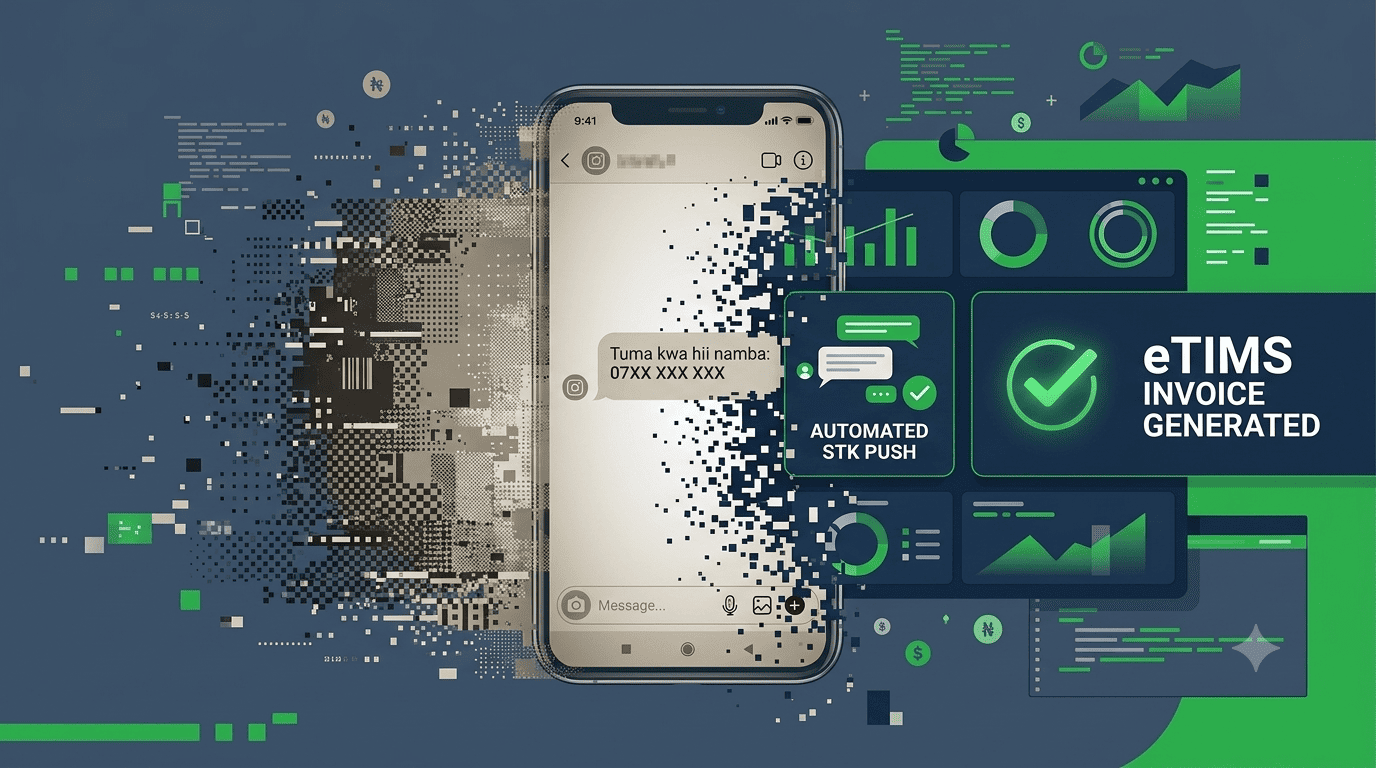
"Tuma kwa hii namba" (Send to this number). It's the phrase that has powered Kenyan informal e-commerce for a decade. A seller posts a product on Instagram, a buyer DMs, the seller replies with a phone number, the buyer sends money, screenshots, and hopes for the best.
In 2026, this workflow is no longer just inefficient—it's becoming a legal and financial liability. With KRA's eTIMS mandate expanding and tighter scrutiny on mobile money transactions, manual, un-reconciled M-Pesa payments are a ticking time bomb for your business.
Why Manual Payments Are Now a Risk
1. eTIMS Compliance
KRA's eTIMS system requires every business transaction to generate a compliant electronic invoice. A random M-Pesa payment into your personal Till number, with no system-generated invoice, is a compliance gap. If audited, you'll struggle to match the payment to a specific sale, especially if multiple transactions look identical on your statement.
2. Anti-Money Laundering (AML) Scrutiny
Safaricom and the Central Bank are increasing transaction monitoring. High volumes of unstructured, manual Till payments can trigger AML flags. A business management dashboard with automated STK Push creates a clean, auditable trail: each payment is tied to an order, a customer, and an eTIMS invoice. This protects you.
3. Reversal & Fraud Exposure
Manual payments lack the robust verification of STK Push. Fake screenshots, wrong amounts, and Fuliza reversals are harder to catch and resolve. Automated STK Push with callback verification dramatically reduces these risks.
The Path to Automation
You don't have to abandon M-Pesa. You need to upgrade how you use it.
- Switch from Till Number to STK Push integration on your e-commerce website. This automatically links every payment to an order and an eTIMS invoice.
- If you must use a Till Number, use Pochi La Biashara (the business wallet) which at least separates business from personal funds and provides a cleaner statement—though it still lacks order-level automation.
- Implement a dashboard that reconciles all payments, whether from STK, Pochi, or bank transfers, into one ledger. This gives you a single, compliant view of your revenue.
Don't Wait for the Audit
The "tuma kwa hii namba" era served us well. But the regulatory landscape has changed. Manual payments are now a liability. Automate before the taxman comes knocking.
Interested in E-Commerce Website with M-Pesa?
Let's build this for your business
Sell to any Kenyan with a phone. Full online shop with Safaricom STK Push payment — no card needed.