The Friendly Discount That's Killing Your Margins
Your shop manager is popular. Customers love him. He greets them warmly, remembers their names, and sometimes, he gives them a "little discount." KSh 100 off here, KSh 200 off there. It's good for customer relations, right?
Except those "little discounts" are unauthorised. They're eating into your margins silently. Over a month, they can add up to thousands of shillings in lost revenue. This is the "manenos" (side deals) problem, and it's one of the most common forms of internal shrinkage in Kenyan SMEs.
Your Business Management Dashboard can detect these patterns without a witch hunt. Here's how.
The Unauthorised Discount Detection System
1. The "Discount Override" Report
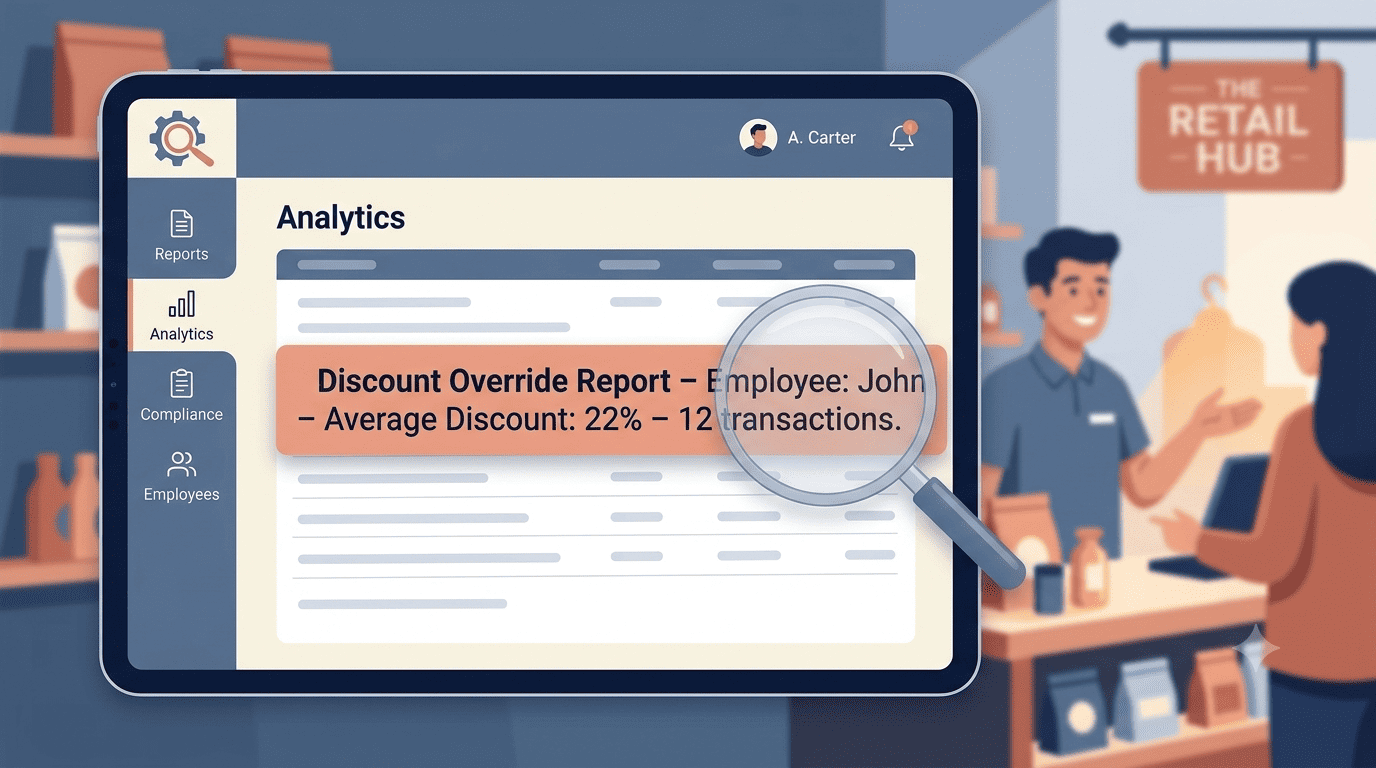
Your POS dashboard tracks every instance where a price was manually overridden or a discount was applied beyond standard promotions. Run a weekly report: "Discounts >10% by Employee." This will surface any staff member who is consistently applying large discounts. A one-off may be a legitimate customer-service gesture. A pattern is a red flag.
2. The "Void & Refund" Analysis
A classic "manenos" trick: the staff member processes the sale at full price, the customer pays, the staff member then voids the transaction (or processes a partial refund) and pockets the difference. A report on "Voided Transactions by Employee" and "Refunds by Employee" will reveal anomalies. High void rates, especially near closing time, warrant a quiet investigation.
3. The "Sweetheart Deal" Detector
Is a specific customer always getting discounts? The dashboard can flag: "Customer X has received an average 18% discount on 7 transactions this month, all processed by Employee Y." This suggests a possible collusion or a "sweetheart deal."
4. The "Time-Based" Anomaly Alert
Discounts applied outside normal business hours, or during specific shifts, may indicate when oversight is weakest. The dashboard can flag: "3 high-value discounts applied on Sunday afternoons by Employee Z."
How to Use This Data Without Creating a Toxic Culture
Never publicly shame an employee based on a report. The data is a starting point for a private conversation. Approach it with curiosity: "Hey John, I noticed you've applied a few more discounts than usual this month. Is everything okay? Are customers pushing back on pricing? Let's talk about our discount policy." It could be a training issue, not theft. The data gives you the reason to have the conversation, but your tone determines the outcome.
Protect your margins. Use data, not drama.
Interested in Business Management System?
Let's build this for your business
Replace spreadsheets, paper records, and WhatsApp chaos with a custom system built for exactly how your business works.