The Unreliable Supplier Problem
You placed an order with your supplier a week ago. They promised delivery in 3 days. It's day 7, and you're still waiting. "Bado tunangoja," you tell your customers. Your shelf is empty. Your sales are zero. Your frustration is high.
Supplier unreliability is one of the biggest operational headaches for Kenyan SMEs. But your dashboard can track supplier actual lead times versus their promises, rank their reliability, and help you plan buffer stock accurately—cutting your out-of-stock days by up to 60%.
The Supplier Lead Time Tracker
Step 1: Record the Promise
When you place an order (via Purchase Order in the dashboard), you input the supplier's promised delivery date.
Step 2: Record the Actual
When goods arrive, the receiving clerk clicks "Goods Received." The dashboard logs the actual delivery date.
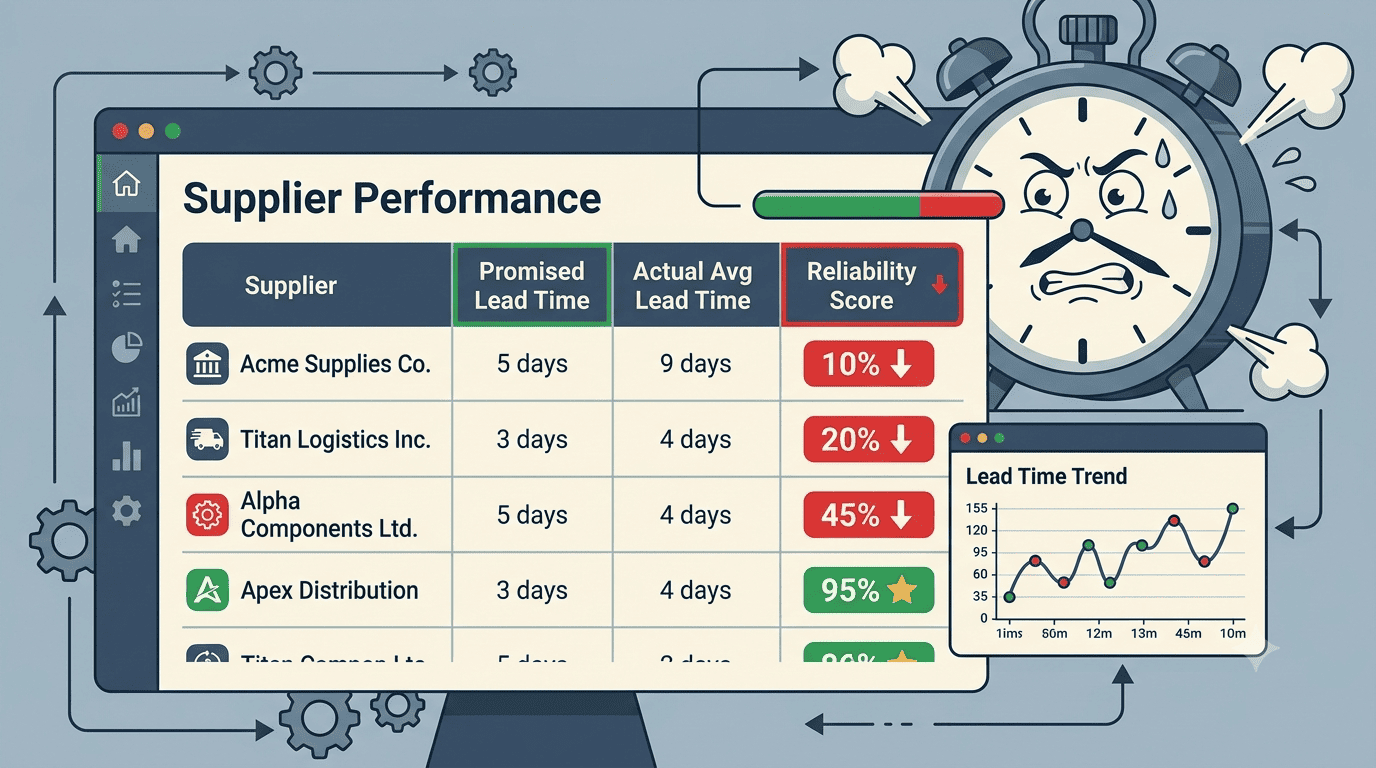
Step 3: The Supplier Performance Report
The dashboard automatically calculates, for each supplier:
- Average Actual Lead Time: (e.g., 4.2 days)
- Promised Lead Time: (e.g., 3 days)
- Reliability Score: % of orders delivered on or before the promised date.
- Trend: Improving or worsening over the last 6 months.
How to Use the Data
1. Adjust Your Reorder Point
If "Supplier A" promises 3 days but actually takes 4.2 days on average, your reorder point should be calculated using 4.2 days, not 3. This simple adjustment, based on real data, prevents stock-outs caused by optimistic promises.
2. Rank Your Suppliers
You can now objectively see who is reliable and who isn't. Give more business to the reliable ones. Have a data-backed conversation with the unreliable ones: "Your average delivery time this quarter has been 5 days, not the 3 you promised. This is causing us stock-outs. Can we agree on a realistic lead time, or should we adjust our order quantities?"
3. Plan Buffer Stock Accurately
Knowing your supplier's true lead time allows you to calculate exactly how much safety stock you need to cover the variability. No more guessing. No more over-ordering "just in case."
The Result
A Stonehenge Digital client, a hardware store, used this tracker to identify their worst supplier and switch to a slightly more expensive but highly reliable alternative. Their out-of-stock days for that product category dropped from 12 days per month to 2.
Stop waiting for unreliable suppliers. Track, measure, and manage them with data.
Interested in Business Management System?
Let's build this for your business
Replace spreadsheets, paper records, and WhatsApp chaos with a custom system built for exactly how your business works.