The Fear-Based Scorecard Fails
If you've ever seen an employee performance scorecard that lists every mistake, every late arrival, every missed target with a red flag, you know the feeling it creates: fear, resentment, and disengagement. That kind of policing scorecard demoralises your team and often leads to worse performance, not better.
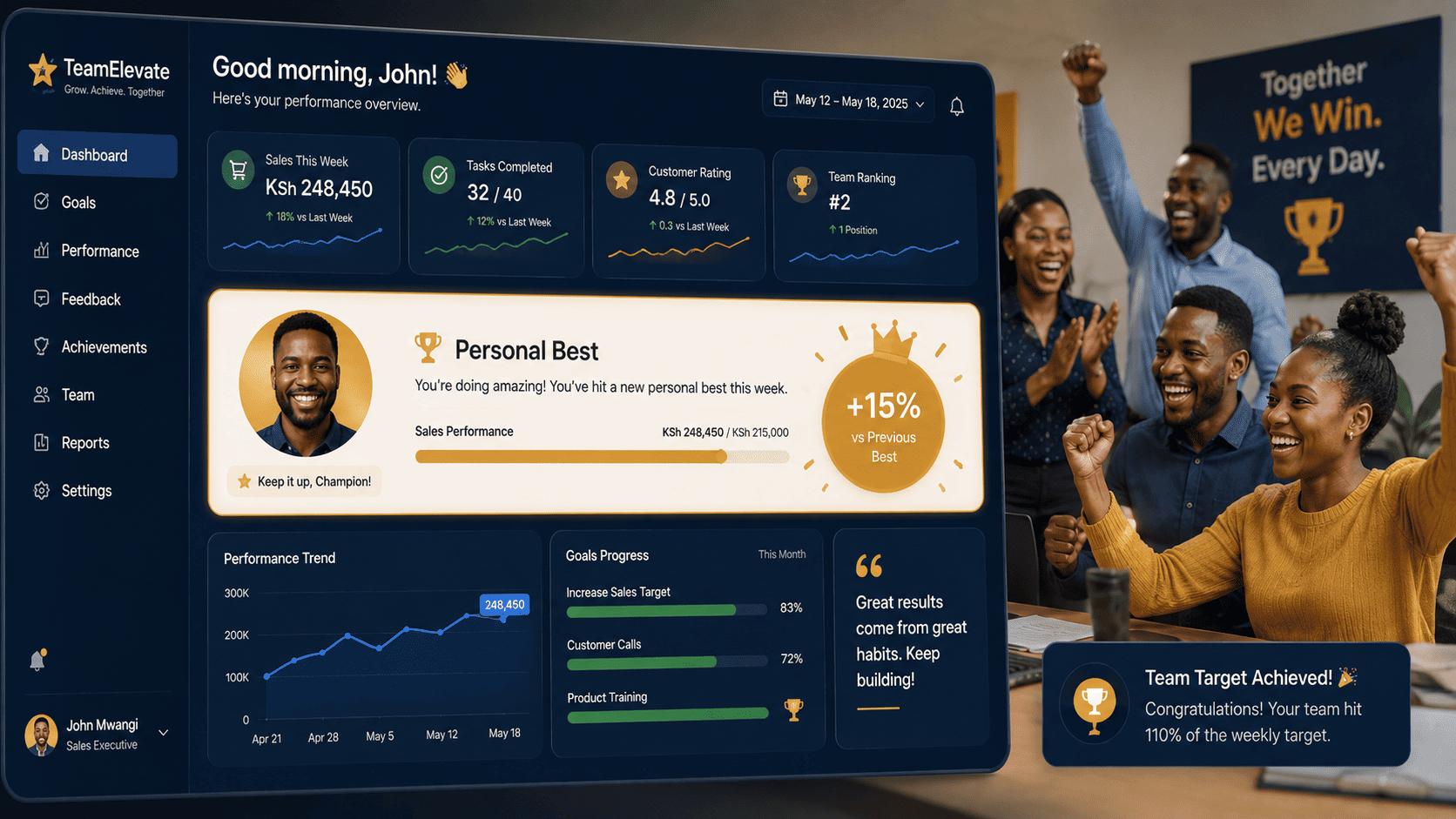
A motivating performance scorecard focuses on growth, contribution, and recognition. It uses data to coach, not punish. Here's how to build one that your team actually welcomes.
The Positive Scorecard Framework
1. Track "Wins" Not Just "Misses"
For each employee, track the positive metrics: sales closed, customers served, positive feedback received, tasks completed on time. Share these wins publicly (or semi-publicly) in team meetings. Celebrate them.
2. Use "Personal Best" Benchmarks
Instead of comparing employees to each other (which breeds competition and resentment), compare each employee to their own past performance. "Mary, your sales are up 15% compared to last month. Great job!" This feels fair and motivating.
3. Frame Errors as "Coaching Opportunities"
If an employee has a high error rate or a low sales figure, the dashboard should frame it as a development area, not a failure. The manager's role is to ask: "What's blocking you? How can we support you to improve?"
4. Link Performance to Rewards Transparently
When commissions or bonuses are tied to dashboard metrics, the rules must be clear and visible to the employee. They should be able to see exactly how their performance translates into earnings. This builds trust and motivation.
The Culture Shift
When you switch from a policing scorecard to a motivating one, you'll see a shift in your team's energy. They'll start using the dashboard as a tool for their own growth, not as a weapon against them. They'll take pride in their numbers and strive to improve.
Data should be a flashlight for growth, not a hammer for punishment. Build a scorecard that motivates.
Interested in Business Management System?
Let's build this for your business
Replace spreadsheets, paper records, and WhatsApp chaos with a custom system built for exactly how your business works.