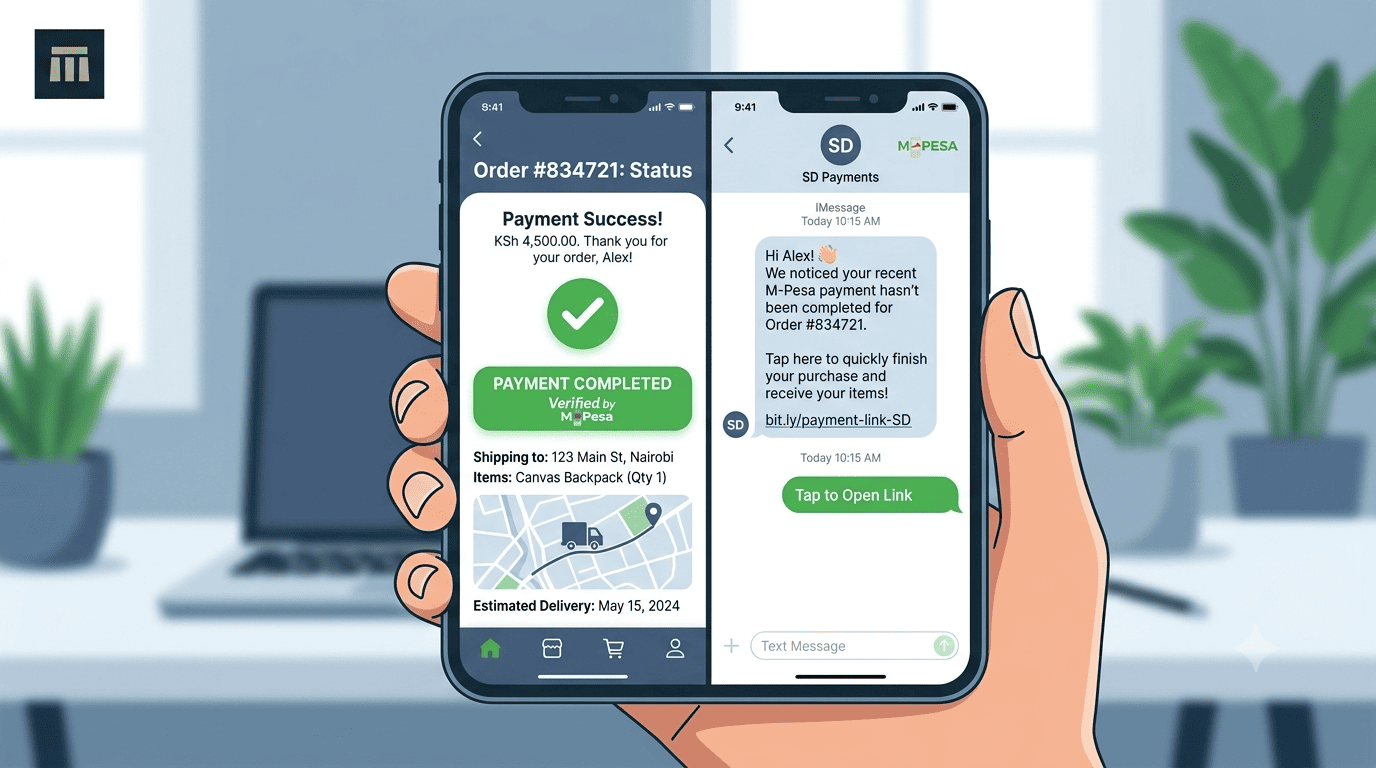
The Half-Paid Order
It happens more often than you think. A customer starts the STK push on your site. They see the prompt, but their phone rings, or they hit "Cancel" by accident, or the network drops mid-transaction. They think they paid. You see the order as "Pending."
Hours later, they call: "Nmelipa! Where is my order?" You check. They didn't. Now you have an annoyed customer who believes you are either scamming them or disorganised. This is the "I thought I paid" phenomenon.
No Nudges
- Customer thinks the order is placed
- You see a "Pending" status
- Customer calls hours later, angry
- Disputes and chargebacks begin
- You lose the sale and the goodwill
Automated Nudges
- Immediate SMS clarifies no money was deducted
- Thank-you page shows "Pending" clearly
- 15-minute follow-up offers help
- Customer resumes checkout easily
- Sale is recovered, trust is kept
The nudge strategy
Three well-designed post-payment nudges can clear up confusion and recover sales before they turn into disputes.
The "Almost There" reminder (Immediate)
If an STK session is initiated but not completed (e.g., the prompt is sent but no confirmation callback arrives within 3 minutes), your system automatically sends an SMS or WhatsApp message.
The message "Hi [Name], we noticed your payment for Order #1102 hasn't been completed yet. No money has been deducted. To finish your payment, just tap here: [link to resume checkout]." This gentle, timely nudge catches the customer while the intent is still fresh.The "Order Status" clarity on the thank-you page
After the checkout, whether payment succeeds or is pending, the order confirmation page must clearly show the status. Use large, unambiguous language.
The page text "Payment Pending. We haven't received your payment yet. Your order will be processed as soon as payment is confirmed. If you believe you've paid, check your M-Pesa balance or contact us."The "Double-Check" email/SMS (15 Minutes Later)
For any order that remains in "Pending Payment" status after 15 minutes, send an automated follow-up. This clears up confusion, offers support, and sets expectations about cancellation.
The follow-up "We still haven't received payment for Order #1102. If you experienced any issues, we're here to help. Just reply to this message or call 07XX XXX XXX. If you've changed your mind, no worries. The order will be automatically cancelled in 24 hours."The business impact
One of our clients implemented this nudge sequence. The automated messages resolved confusion without human intervention, and the clear order status page reduced support calls.
Confusion Cleared, Sales Recovered
The client recovered 22% of "pending" orders that would have otherwise been abandoned and disputed. A small, automated nudge turned a potential conflict into a completed sale.
The "I thought I paid" phenomenon is a common point of friction in Kenyan e-commerce. But it is easily solved with timely, automated communication.
Use immediate, clear, and supportive nudges to guide the customer back to the checkout and recover the sale.
Ready to recover your half-paid orders?
Stonehenge Digital builds e-commerce platforms with automated STK monitoring, SMS/WhatsApp payment nudges, and clear order status pages, so no sale is lost to confusion.
Set Up Payment Nudges →Interested in E-Commerce Website with M-Pesa?
Let's build this for your business
Sell to any Kenyan with a phone. Full online shop with Safaricom STK Push payment — no card needed.