Blogging for Kenyan Search Traffic
A blog is not a diary. It is a lead generation machine. Every well-written, optimised blog post is a net that catches people searching for the exact problem you solve.
This tutorial shows you how to write a blog post that ranks on Google Kenya and brings you organic traffic for years.
Step 1: Find a keyword Kenyan searchers actually use
Do not guess. Research. The difference between a post that ranks and a post that sits quietly is usually the keyword it was built around.
- Go to Google Kenya.
- Start typing your topic. Google will autocomplete with real searches. Typing "How to start a..." shows "How to start a business in Kenya," "How to start a poultry farm in Kenya," and more.
- Use free tools: Ubersuggest, AnswerThePublic, or Google Keyword Planner.
- Look for keywords with decent search volume, 100 or more per month, but low competition.
Built around real demand
- Found in autocomplete and keyword tools
- Searched by real people every month
- Low enough competition to rank
- Matches a problem you solve
- Keeps bringing traffic for years
Built around a hunch
- Chosen because it sounds interesting
- Nobody is actually searching for it
- No competition because no demand
- Describes your business, not a question
- Gets a few visits and then goes quiet
Step 2: Structure your post for search intent
Ask what the searcher is actually looking for. In this case, they want a clear, step-by-step guide. Your post should deliver exactly that, in that order.
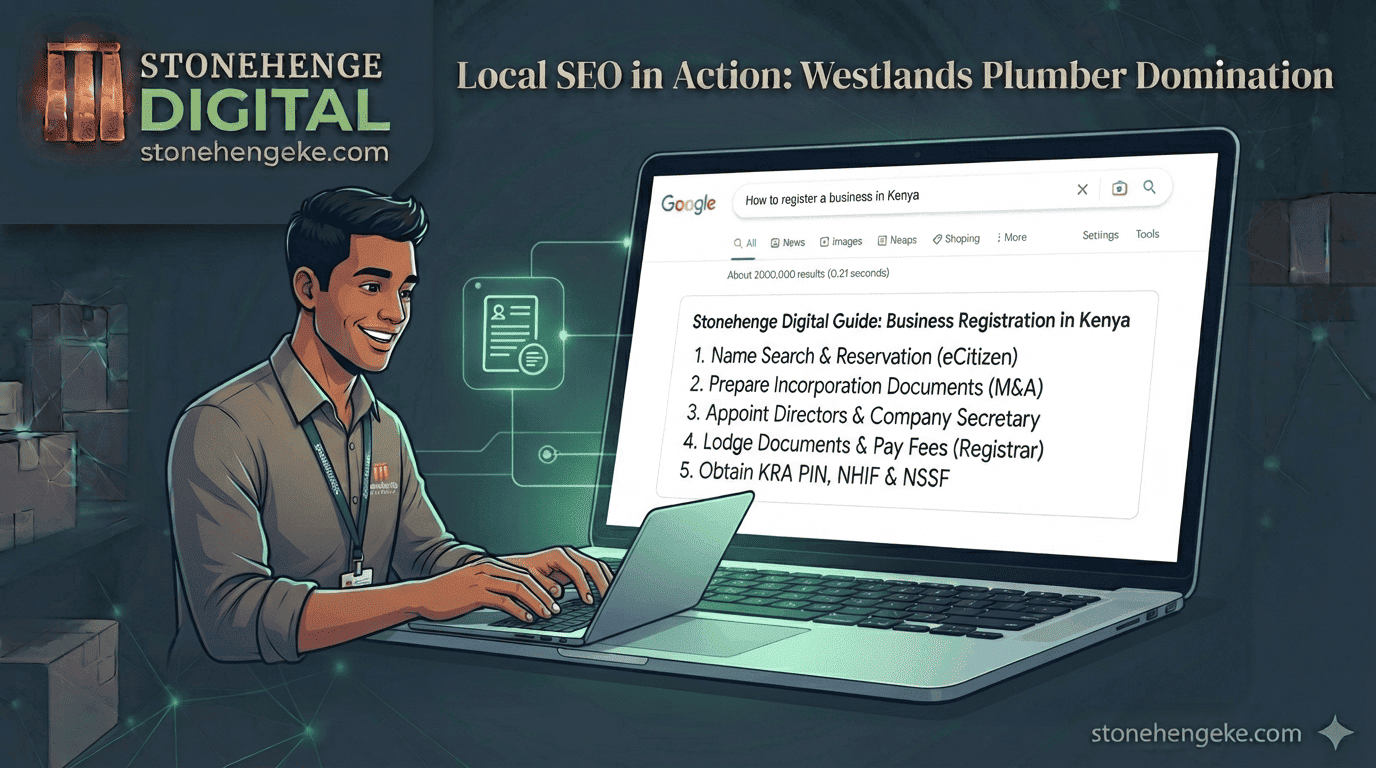
How to register a business in Kenya
- Introduction: Why this matters, briefly.
- Step 1: Choose your business structure.
- Step 2: Reserve your business name on eCitizen.
- Step 3: Apply for your KRA PIN.
- Conclusion: Summary and next step, with a call to action.
Step 3: Write the title and headings with keywords
The title tag is the H1, and it is the first thing both Google and the searcher read.
Then carry the keyword and its variations into the subheadings, so the structure itself speaks the searcher's language.
Step 4: Write for humans, optimise for Google
The best post serves the reader first. The optimisation is what makes sure the reader finds it.
Use short paragraphs
Two to three sentences at most. Long blocks of text get skimmed and abandoned, especially on a phone.
If a paragraph needs a breath, it is too long.Use bullet points and numbered lists
Lists are easy to scan, easy to follow and easy for Google to lift into a snippet.
A step-by-step guide should look like steps.Include the keyword naturally
Do not stuff it. Aim for one to two mentions per 200 words, in places where the phrase genuinely belongs.
If the keyword reads awkwardly, a human will notice.Add internal and external links
Link to your other relevant pages, for example "See our guide on KRA PIN registration," and to authoritative sources such as eCitizen and KRA.
Internal links keep readers on your site. External links build trust.Step 5: Optimise for featured snippets
Google often shows a featured snippet, the box at the top, for "how-to" queries. Winning it puts your answer above every normal result.
- Provide a concise, numbered list near the top of the post.
- Use the exact question as a subheading, for example "How do I register a business in Kenya?"
- Follow it with a brief, clear answer in two or three sentences.
Step 6: Add the meta description
This is the snippet shown in search results. Write a compelling summary that includes the keyword and a call to action, and keep it within about 155 characters.
Step 7: Publish and promote
A published post is not a finished post. Promotion is how it gets its first visitors, and those first visitors are a signal to Google.
- Publish on your website.
- Share on your WhatsApp Status, social media and LinkedIn.
- Send it to your email list, if you have one.
- Link to it from related pages on your site.
Step 8: Monitor and update
Use Google Search Console to see which queries bring traffic to the post. After 3 to 6 months, update the post with fresh information, improved structure or new data. Google favours updated content.
The compounding effect
A single well-optimised blog post can bring you traffic for years. If you publish one useful post per week, you will have 52 lead generation assets within a year.
That is the power of content marketing. Start writing.
Ready to build a content engine?
Stonehenge Digital builds organisational websites with clean structure, internal linking and keyword-led blog setups, so every post you publish has somewhere to rank and a path to convert.
Get Help with My Content Strategy →Interested in Portfolio & Organisational Website?
Let's build this for your business
A professional, mobile-first website that makes your business look credible and gets found on Google.